
❖ What does IPO allotment mean?
When a company launches its IPO, investors apply to buy the shares of the IPO. The very next day, after the IPO closes for subscription, is the date of the IPO allotment, which is approximately 24 hours after the IPO closes.
Every company that launches its IPO appoints a registrar that manages the record of IPO applications, allotment of shares, and refunds. There are several registrars like MUFG Intime India Pvt. Ltd, KFin Technologies Pvt. Ltd., and Bigshare Services Pvt. Ltd, appointed by the companies to manage the IPO efficiently.
IPO allotment tells you if you got the shares you applied for or not. If you did, then the amount will get debited from your account, and if not, then the blocked amount gets unblocked.
❖ How to Check the IPO Allotment Status
You can check the IPO Allotment status using several methods, including:
👉 Check the allotment status using the Registrar’s Website
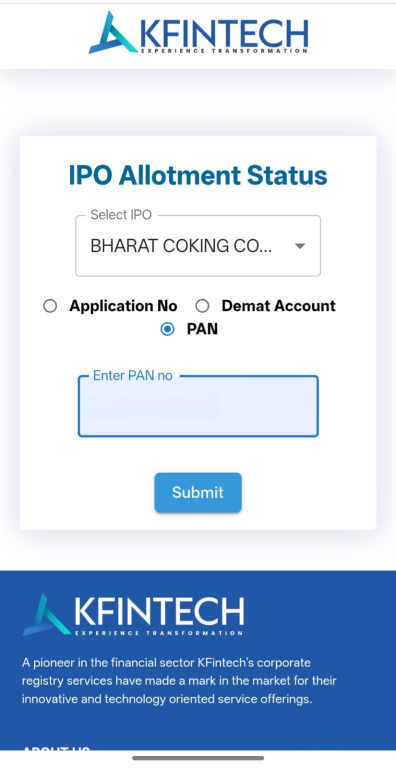
Since every IPO has a registrar handling IPO allotment, you need to visit the registrar’s official site to check the IPO allotment status.
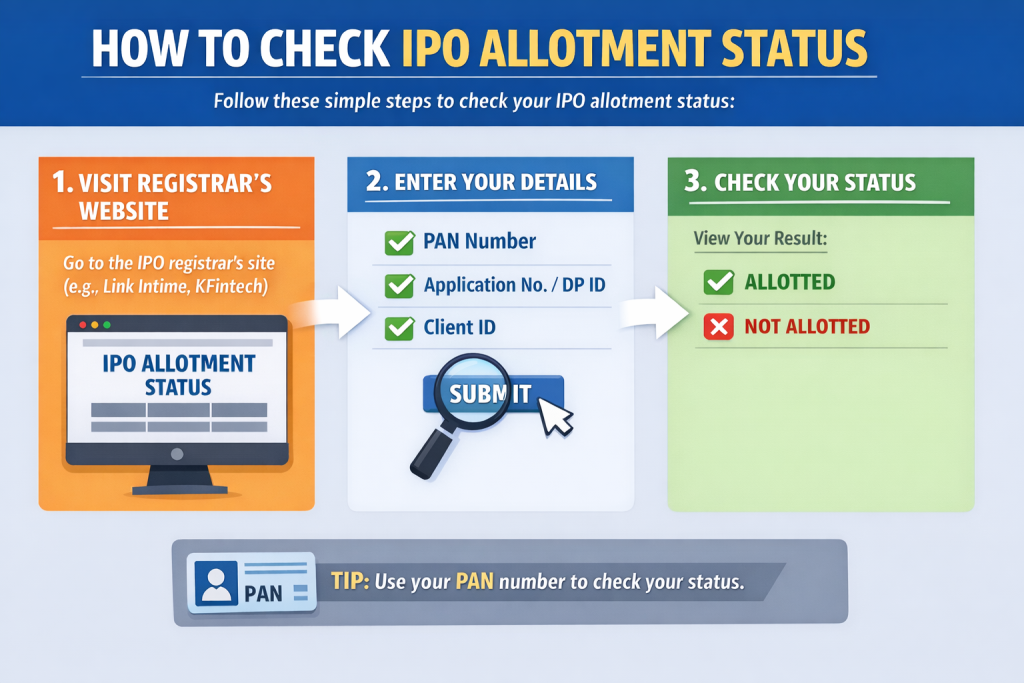
- Visit the registrar’s official website, such as KFin Technologies, MUFG Intime India Private Limited, and Bigshare Services Pvt Ltd.
- Select the IPO allotment status option
- Select the Company name you applied for
- Enter either the PAN card number, application number, or DP ID to check
- Click Submit
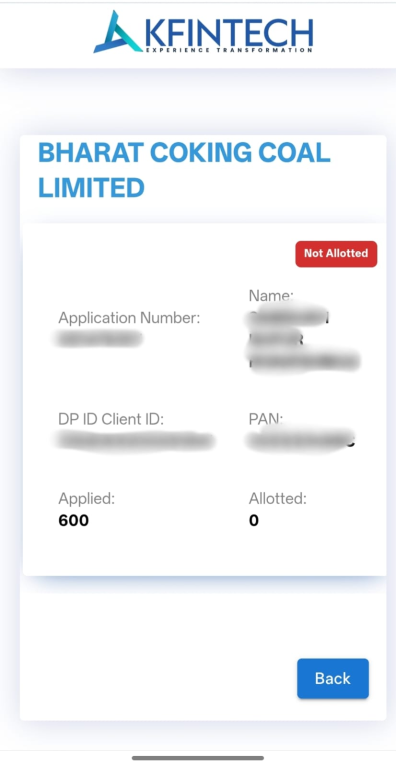
- The page will show you whether you got an allotment or not, with the number of shares.
👉 Using the Stock Exchange Website
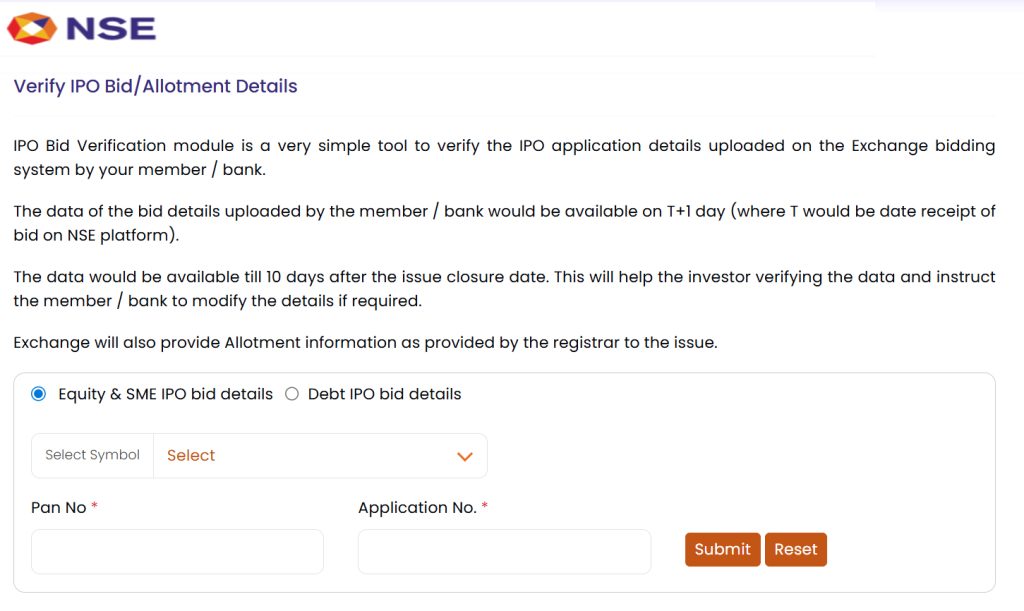
Another way you can check the IPO allotment status is through the stock exchanges:
NSE (National Stock Exchange)
2. BSE (Bombay Stock Exchange)
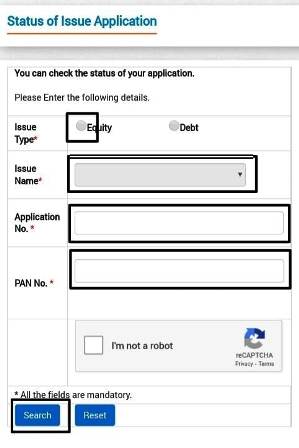
- In the Google type IPO allotment status NSE
- Check IPO allotment status BSE
- And you will be provided with the official allotment status link to check your IPO allotment details.
- Enter your PAN, application number, or DP ID/Client ID to check the result.
👉 Through Your Bank or Broker
Many bank apps and brokerage apps offer an IPO allotment status check feature
- Log in to your bank or brokerage platform
- Go to the IPO section
- Click on your application’s status
- From there, you will know whether the shares got allotted or not.
👉 Know your ipo allotment status through notification
Lastly, if you don’t want to check IPO allotment status manually, then you can just wait for the email or SMS. Meaning if your allotment is finalized, then the broker app or registrar will notify you via email or SMS with allocation details. If not, then they will notify your bank to unblock the blocked funds in your account.
❖ How is IPO allotment status finalized?
I am sure investors who apply for the IPO must have this question in mind: how does IPO allotment status get finalized, and what’s the process behind it? Don’t worry, in this article, we will tell you how IPO allocation is finalized.
- After the IPO closing date, the IPO registrar finalizes the allotment based on the subscription numbers.
- IPO registrar removes the unwanted, duplicate, or rejected bids like incorrect PAN, multiple applications, or technical errors.
- Then the application was categorized by group, such as Retail Individual Investors (RII), Qualified Institutional Buyers (QIB), and Non-Institutional Investors (NII).
- If the IPO is unsubscribed, then all the investors who applied get the allotment.
- If the IPO is oversubscribed, the allotment is made through a computerized lottery system, as per SEBI guidelines, to ensure fair allotment and prevent cheating.
- The registrar coordinates with the stock exchange and decides the number of shares each investor receives.
- If shares are allotted, the amount will be debited from the account.
- If not, then the amount will get unblocked in your bank.
- An investor can check the IPO allotment status on the registrar’s website, the stock exchange BSE or NSE, and through broker/bank apps.
FAQs:
IPO allotment status shows whether or not investors have been allotted shares in an IPO.
IPO Allotment status is announced after 24 hours of the IPO closing for subscription.
Investors can check the IPO allotment status on the IPO registrar’s website, NSE/BSE websites, broker apps, or through email/SMS notifications.
Investors must be required to have a PAN, an application number, or a DP ID/Client ID.
If you do not receive an IPO allotment, the blocked fund will get unblocked in your account on the same day or the next day of allotment.
You may not receive an IPO allotment if:
1. The IPO is oversubscribed
2. If you did multiple applications using the same PAN card
3. If you have entered the incorrect application details (PAN, DP ID, bank details)
4. If you apply for the IPO at the last minute, the application may fail due to technical issues.